


From the Bench: The Hon. Jill L. Burkhardt Becomes Presiding Magistrate Judge
Updated: Mar 22
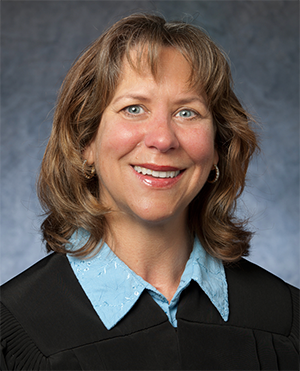
On December 29, 2025, the Hon. Jill L. Burkhardt took over the reins as Presiding Magistrate Judge of the U.S. District Court for the Southern District of California. Judge Burkhardt’s new responsibilities come at a moment of significant change for the Court, marked by rising caseloads, new faces on the bench, and rapid technological developments that are reshaping legal practice.
Under General Order 162-E, the role of Presiding Magistrate Judge is filled by the judge who is senior in appointment and meets certain age and experience criteria. In addition to a Magistrate Judge’s normal duties, the Presiding Magistrate Judge is responsible for overseeing coordination among the Court’s Magistrate Judges, serving as the liaison to the District Judges, and guiding procedural initiatives aimed at greater efficiency. Judge Burkhardt will hold this new role for two years.
Judge Burkhardt brings twelve years of judicial experience to her position as Presiding Magistrate Judge. She was appointed to the bench in March 2014 and is now well into her second eight-year term. During this time, Judge Burkhardt has handled a broad mix of civil and criminal matters and has presided over countless settlement conferences.
Judge Burkhardt’s term as Presiding Magistrate Judge begins amid significant turnover in the makeup of the Magistrate Judge bench. In 2025, the elevation of the Hon. Benjamin J. Cheeks to District Judge opened a seat now filled by the Hon. Brian J. White. In addition, with the retirement of the Hon. Karen S. Crawford in March and the anticipated retirement of the Hon. Barbara L. Major in April, comes the appointment of two brand new Magistrate Judges, the Hon. Gil Cabrera and the Hon. Janet Cabral. Further, there may be as many as three additional openings on the Magistrate Judge bench in the next two years, as the result of additional anticipated retirements. Relatedly, construction of additional Magistrate Judge chambers on the seventh floor of the Carter–Keep Courthouse is scheduled for completion in September 2026. The completion of these chambers will allow all Magistrate Judges to once again be housed in our two federal courthouses, with no more need for off-site Magistrate Judge chambers.
Looking ahead to the next two years, Judge Burkhardt hopes to build on the good work of those who served in the role of Presiding Magistrate Judge before her who have continuously improved the administration of the Magistrate Judge bench. “In the Southern District of California, the District Judges and Magistrate Judges alike put a premium on making the judicial system accessible, efficient, and fair for the litigants and lawyers with cases in our Court,” she said. “I see my job mainly as working with my colleagues to identify places for continued improvement in those areas.”
The workload facing the Court underscores the importance of Judge Burkhardt’s priorities. From December 2024 to December 2025, civil case filings increased 51% and criminal case filings increased 73%. “We have not had any increase in resources to handle that greater caseload,” Judge Burkhardt said. “The Magistrate Judges continue to pull together and support each other as we endeavor to manage the additional work without diminishment of the quality and timeliness of the service we provide.”
Before joining the bench, Judge Burkhardt was a civil litigator at Baker & Mckenzie and a criminal prosecutor at the U.S. Attorney’s Office. As someone who has spent her entire legal career in San Diego, Judge Burkhardt has long taken pride in the collegial spirit that has traditionally distinguished San Diego’s legal community. However, Judge Burkhardt said she has recently detected some fraying at the edges.
“It was a pleasure to practice law in San Diego where attorneys conducted themselves with greater civility and professionalism than in many other parts of the country, or even other parts of the state. I appreciated that even more after I took the bench,” she said. “However, I have noticed more recently that some attorneys and parties have become a little less accommodating, a little more aggressive in their approach to litigation.”
Although she hopes her perception of a recent uptick in incivility merely stems from the luck of the draw and what is perhaps a coincidental and temporary increase in less-than-pleasant cases on her own docket, Judge Burkhardt remains “wary that San Diego may be entering an era of attorneys moving further away from our long-standing tradition of ‘small town’ civility.” She believes that preserving a culture of respect is essential to the efficient resolution of disputes and to maintaining public confidence in the judiciary.
Judge Burkhardt also foresees both challenges and opportunities as generative AI evolves and assumes what she believes will be an ever-increasing role in the practice of law. “The Court will surely need to stay abreast of the impact of these changes on the practice of law and the administration of justice,” she said. “These are exciting tools that, if used wisely, can improve productivity for lawyers, saving client resources and improving legal services. But they also hold the potential for great mischief, as we have unfortunately already seen.”
With her extensive experience and forward-looking agenda, Judge Burkhardt is well positioned to lead the Magistrate Judge bench through a demanding period in the Southern District of California.

